Category: Uncategorized

  • Opinion: Why Kilmar Abrego’s Case Could Pose a Threat to Our Constitution

    Opinion: Why Kilmar Abrego’s Case Could Pose a Threat to Our Constitution

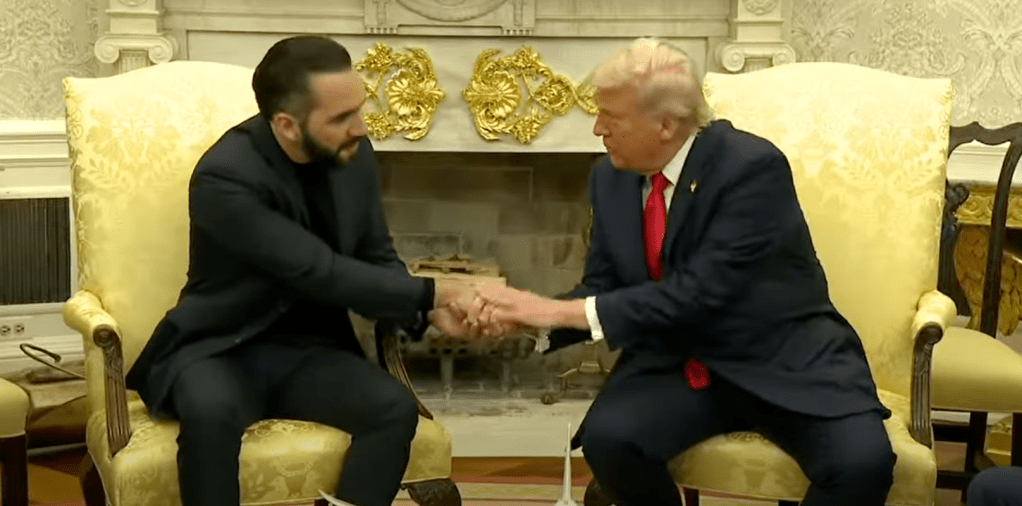
    Kilmar Abrego Garcia’s case has presented the Trump administration with unprecedented circumstances which could put into question our constitutionally protected right to due process, and the system of checks and balances intended to prevent authoritarian control by any branch of government. This comes after Salvadoran President Nayib Bukele’ visit to Washington and his stated unwillingness to send Abrego back to the U.S. Let’s take a look at what’s at sake.

    Due Process

    Abrego, who had been granted withholding of removal, was deported to El Salvador without due process. The Fifth Amendment of the U.S. Constitution states that the federal government cannot deprive one of “life, liberty or property without due process of law.” This applies to all persons within the U.S., including non-citizens.

    Due process is understood as the obligation that our government has to give someone who has been accused of a crime the right to a fair trial, which was denied to Kilmar Abrego. Not once before getting sent to CECOT did Abrego have an opportunity to argue his defense, to present to a court his valid immigration status, or to refute the baseless claims about ties to MS-13.

    This administration has shown its willingness to punish someone without abiding by the constitutionally guaranteed right to due process, which should ring an alarm for anyone who has an interest in protecting our rights. The administration has also presented a dangerous model to imprison anyone without due process by sending detainees to countries outside of the jurisdiction and claiming they can do nothing about it. It provides a framework for authoritarian jailings beyond the power of U.S. citizens.

    This presents a loophole to undermine any person’s constitutional rights. It establishes a framework for an authoritarian government to arrest anyone, ship them off to a foreign prison and claim that the individual is outside of U.S. jurisdiction and that nothing can be done.

    As the Fifth Amendment does not pertain solely to citizen or non-citizen, these actions put at risk the right that all people have to due process as we know it. It could also potentially set precedent for the government to take action against anyone for any reason, imprisoning anyone without providing a fair trial.

    💡
    Following the meeting with Trump and Bukele in Washington on April 14, 2025, Trump has reportedly claimed that “home-grown’s are next”.

    Checks and Balances

    While the Supreme Court has upheld the decision by a lower court to “facilitate” the return of Kilmar Abrego Garcia, the constitution provides no way for the courts to enforce their decision. The separation of powers and system of checks and balances relies on the recognition of the court’s authority by the other two branches and in this case, the Executive.

    The administration has argued that US officials cannot compel the Salvadorian government to return him. However, the deportation of prisoners to El Salvador is a paid agreement between the two countries, an agreement which theoretically may be terminated. The funds which the U.S. has given El Salvador are reportedly to assist in the funding of the Salvadorian Prison system, which the U.S. government could use as leverage to pressure Abrego’s return.

    Additionally, while Bukele states that he does not have the power to return him to the United States, the Salvadoran Government has extradited Salvadoran citizens to the U.S. allowing the U.S. government to fulfill it’s constitutionally mandated duty to provide due process. The U.S. and El Salvador also have an extradition treaty, giving both governments full power to send Abrego back should this administration have full intent to engage in its constitutional responsibilities.

    This goes to show the multiple different avenues and historical legal precedent which the administration can use to follow the court’s orders, which should be quite easy for an “expert negotiator”.

    If the Administration should proceed to resist, this may put into question the extent of the power that the Judiciary has. It could set extremely dangerous precedent which undermines the systems of checks and balances designed by the constitution and creates a framework for the authoritarian imprisonment of anyone, citizen or not, without a trial.


  • Latest Ruling in Mahmoud Case Raises Citizen Rights Concern

    Latest Ruling in Mahmoud Case Raises Citizen Rights Concern

    Update on Mahmoud Khalil’s Case

    On April 11, 2025, the court held that the government established by clear and convincing evidence that Mahmoud is removable. The attorneys for Mahmoud criticized the hearing’s fairness. Much is left to speculation because the court did not delineate the evidence it weighed in making this determination.

    If the court simply based its decision on a memorandum from the Secretary of State, this raises serious concerns. The government is using INA section 237(a)(4)(C), a rarely used law from the Cold-War Era to deport Mahmoud.

    The law requires that the government present clear and convincing evidence that Mahmoud’s presence or activities would have serious adverse foreign policy consequences for the government. The law also allows the government to proceed if the Secretary of State personally determines that an undocumented person’s admission would compromise a compelling U.S. foreign policy interest.

    Based on the ruling, it would appear that the Judge found that Mahmoud engaging in protected speech and expressing anti-war sentiments had serious adverse foreign policy consequences and that Mahmoud compromised a compelling U.S. foreign policy interest based on the Secretary of State’s personally making this determination.

    The question is “what evidence was presented to make these findings”? The law requires evidence that Mahmoud’s actions caused the government serious adverse foreign policy consequences and that a compelling U.S. foreign policy interest was compromised.

    Based on the information that has so far been presented against Mahmoud, he engaged in protected speech and there is no evidence that this actions had serious adverse foreign policy consequences for the government or that his actions compromised a compelling foreign policy interest. This ruling gives way to subjective government intrusion of constitutional rights.

    Although INA section 237(a)(4)(C) does not apply to U.S. citizens, this ruling opens the door to the creation and/or application of similar laws applicable to U.S. citizens that would obviously not make them deportable but would criminalize protected speech.

    Although anti-war and political speech protections are well-established, this case should be a warning to U.S. citizens because it was also well-established that legal permanent residents’ anti-war and political speech fell under this well-established protection. The ruling opens the door to political persecution that would only require the Secretary of State to “personally” make a finding that the speech compromises a compelling foreign policy interest.

    This ruling will be appealed by Mahmoud’s attorneys to the Board of Immigration Appeals. He also has a pending case challenging the legality of his detention. Nonetheless, this latest ruling raises concerns about the limits of the government.

  • Timeline of Kilmar Abrego’s Case and Bukele’s refusal to send him back.

    Timeline of Kilmar Abrego’s Case and Bukele’s refusal to send him back.

    Updated April 14, 2025

    On April 10, 2025, the Supreme Court upheld the decision of a lower court ordering the Trump administration to “facilitate” the return of Kilmar Abrego Garcia. This comes after Abrego’s deportation to the Salvadorian prison known as CECOT and what the administration admitted to be an “administrative error”.

    Let’s take a quick look at the timeline of events leading up to the Supreme court order.

    Timeline of Events

    On March 12, 2025, Abrego was stopped by ICE agents in his car with his 5 year old son. ICE agents contacted the child’s mother, telling her “she had ten minutes to pick up her son before he was turned over to child protective services.”

    At the time, Abrego had a work permit in the U.S. and was still granted a withholding of removal, which forbade his removal to El Salvador.

    On March 15, 2025, the Trump administration sent three planes with the deportees to El Salvador. This was done without a trial or hearing to determine the validity of a deportation or the validity of the claims to having MS-13 gang ties, violating the Fifth Amendment of the constitution which ensures that the federal government cannot deprive one of “life, liberty or property without due process of law.” This applies to non-citizens as well.

    The plane holding Abrego was ordered to turn around by Judge Boesberg stating “You shall inform your clients of [the Order] immediately, and that any plane containing [members of the class] that is going to take off or is in the air needs to be returned to the United States”

    Despite this order, the plane proceeded to land in El Salvador, leaving Abrego in the Salvadorian prison known as CECOT, while having never been convicted of any wrongdoing. The Trump administration admitted to his wrongful deportation, claiming it to be an “administrative error”.

    On April 4, 2025, The United States District Court for the District of Maryland ordered the facilitation of his return and on April 10, 2025, the Supreme court unanimously upheld the lower courts decision.

    On April 14, 2025, Salvadoran President Nayib Bukele visted Trump in Washington, stating that the question to return Kilmar Abrego was “preposterous”. Bukele also stated that he does not have the power to send Abrego back nor the interest to do so. The U.S. and Salvadoran government have an extradition treaty which allows either government to send detainees to either country, as well as historical precedent of the Salvadoran government extraditing Salvadoran citizens to the U.S.

  • No, The Trump Administration’s Tariffs are Not Pro Working Class

    No, The Trump Administration’s Tariffs are Not Pro Working Class

    As the Trump administration proceeds with increased tariffs on Chinese imports climbing as high as 145%, the cost on the working class will be ever more apparent. Tariffs, which function as a tax on the importer, not the exporter, will encourage importing companies to pass the cost onto the working class, raising prices on various goods and contributing to the hardship that many American families already face. However, the question begs if a return to normalcy will solve the problem for the average worker.

    Trump’s Tariffs come as an unraveling of the era of Free Trade, which was marked by policies and agreements between nations that sought to eliminate barriers to trade, such as tariffs and other regulatory measures.

    These agreements, however, opened the door for industry leaders to export their manufacturing to countries where labor was much cheaper in order to cut costs and increase profit margins. This in turn contributed to the outsourcing of American manufacturing jobs, which not so coincidentally were “traditional bastions of unionization,” further contributing to the decline of pro-worker organizations; Our Trade Unions.

    These Free Trade Agreements resulted in the decline of manufacturing jobs in the U.S. and thus the decline in unionized jobs which contributed to growing wage inequality, actively working against the working class.

    Now, Trump’s tariffs are no solution either. While the Administration claims that the tariffs are an attempt to bring back manufacturing to America and to support the working class, they have done little to support either.

    The imposition of tariffs without first creating a competitive domestic manufacturing base, which the U.S. lacks due to decades of offshoring, will leave the working class with no domestic option to buy from in order to avoid the tariffs. American workers will have no other option but to purchase from price hiked foreign products, weakening their purchasing power.

    Additionally, the Administration has done little to promote domestic manufacturing or to engage in the construction of factories and resource extraction industries that would perform competitively with Chinese manufacturing.

    Should the return of American manufacturing jobs be the case, the Trump Administration has shown no interest in supporting workers rights or respecting union bargaining. There is no reason to believe that the return of American manufacturing under this administration would guarantee sufficient wages, safe working conditions, reasonable hours, or the numerous other benefits which unions have won for the working class.

    The resolution of the administration’s tariff war will only be a victory for corporate elites who will continue to profit off of cheap labor markets in other countries, or in a new, cheap American labor market.

  • How The Profit-Economy is structured

    How The Profit-Economy is structured

    We all know that any Industry is guided by the profit motive, but we want to look into the actual structures which produce this behavior. Beyond the general culturally imbedded desires to seek more and more profits, there are also real pressures which require an Industry, whether it be agricultural, pharmaceutical, tech, etc to seek constant profit.

    We’ll put it nice and short: Essentially all Industry, no matter how large, has investors and shareholders who invest their own money into an Industry so that the Industry has the resources required to operate at a competitive capacity.

    If those investors feel as though the performance of that Industry is failing or will fail to give them returns on their investment, they pull out their investment, as the reason they invest is to receive returns.

    For Industry, losing investors can be disastrous. This lack of investment could mean ceasing operations or failing to have the resources to perform competitively, ultimately leading to their demise in the long run. They may have to downsize, increase prices, sell capital, etc.

    So for Industry leaders, they are compelled to pursue profits often at the expense of their own workers and of the working class in order to meet the interests of investors and shareholders to prevent going under, losing to competitors, or losing their job.

    Understanding this structure is crucial to understanding the actions and motivations of any private Industry, from the systemic usage of pesticides to increase yields to increase profit, to gouging the prices of prescription medicine, to moving production offshores where labor is cheaper, to underpaying their workforce, etc.

  • March on Washington over U.S. support for Israeli Genocide of Palestinians

    March on Washington over U.S. support for Israeli Genocide of Palestinians

    On Saturday April 5th 2025, thousands showed up in Washington D.C. to protest the ongoing genocide by Israel against the Palestinians. The event featured many speakers who highlighted the history and struggles of the Palestinian people as well as the goal for Palestinian liberation. The march was hosted by a series of organizations under the “March on Washington” banner, saying this about their movement:

    “This movement is made of students, workers, teachers, artists, activists, healthcare workers, tech workers and people of conscience all over the world who will not back down in the face of repression and intimidation, and will never back down so long as Gaza is under attack. That’s why on April 5th we are standing up to Trump and his ethnic cleansing plan for Gaza, we are standing up to repression, and we are standing up to the US’s continued facilitation of the genocide in Gaza. We demand a permanent ceasefire and an arms embargo now!”

    The goal is to encourage the U.S. government to withdraw its support as the primary supplier of military and financial aid to the Israeli government, which provides the Israeli Government with the means to conduct military operations in civilian centers. The U.S. government supplies Israel with about 69% of its arms, including bombs, missiles, jets, ammunitions and small arms, to include a few.

    The U.S. withdrawal of that support would mean the inability for the Israeli government to conduct its military operations on its current scale, which has resulted largely in civilian causalities, leading to about 50 thousand deaths of children, parents, reporters, and first responders.

    Additionally, U.S. funding to Israel has reached about $18 billion in military aid and counting since October 7th 2023, not including what the U.S. has given the Israeli government previously, costing the American tax payers billions while our schools, libraries, and public assistance programs struggle for proper funding.

    Many of the speakers called for a U.S. embargo on military aid, demands of justice for political prisoners, and for an end of Israeli occupation of historically Palestinian lands.

    One event speaker, Taher Dahleh from the Palestinian Youth Movement said: “Politicians in government everyday either choose to meet the people’s needs in housing, in healthcare, education, in access to food, or they can choose to continue sending billions of dollars to Israel for its war of extermination”.

    The Trump administration has continued its support for Israel, approving $7 billion in an arms package in February of 2025.

    Monadel Herzallah from U.S. Palestine Community Network says about Palestinian Liberation: “It’s about what kind of world that we are going to be living in, and what kind of world we leave behind for our children. That is what’s at stake. We will not accept to live in a world where genocide is normal.”

  • The Working Class will bear the brunt of the Liberation Day tariffs

    The Working Class will bear the brunt of the Liberation Day tariffs

    On Wednesday evening, President Trump announced a series of tariffs that will be placed on imports from over 180 countries. While Trump has claimed that this will make America wealthy, the effects of the tariffs say otherwise. The tariffs will be reaching far into the pockets of working class Americans. Let’s take a look at a few of the coming consequences, leading to increased prices on all goods, both foreign and domestic.

    HOW TARIFFS INCREASE THE PRICES OF ALL GOODS

    While it may seem at first that the tariffs will be imposed on foreign companies, the price of the tariff quickly passes down to the consumer. We’ll follow the ladder down from point of import to point of purchase by the consumer

    • Manufacturers (think automakers, tech producers, etc), wholesale companies, or big retailers (think Target, Walmart, etc.) import materials to produce or import goods from abroad. Increased tariffs mean manufacturers and retailers must now pay an additional “tax” on all items coming in from abroad.
    • In order to protect their profit margins after paying increased prices on imported goods and materials, the business passes off the cost to the next buyer, this increases prices of products. Manufacturers pass off the cost to the distributor and the distributor to the retail stores, and retailers to consumer.
    • Example: Big Retailer purchases televisions from supplier country for $100. Tariffs now impose a 30% cost increase on TVs from supplier country, raising the cost to $130. Big Retailer, looking to protect their profits, now sells the TVs for 30% more, which the consumer ultimately buys for $130 instead of $100.

    Increased tariffs don’t just impact imported goods and materials either. Domestic retailers will also inevitably join in on the increased prices. If foreign TVs now cost $130, domestic producers will be inclined to join in and sell theirs for $120, taking advantage of the inflated market to increase profit margins, which has historically been the case.

    Such wide sweeping tariffs on almost every nation, virtually every product will be affected, as they are either constructed with materials from these countries, or are assembled in these countries. You will be hard pressed to find a product whose materials were mined, assembled, and sold entirely with the U.S., subjecting almost all goods to increased prices.

    Even if the expressed intent is to increase American manufacturing, almost every manufacturer relies on imported raw materials. We rely on foreign lithium, iron, cobalt, bauxite, rubber, etc. Not only would the U.S. now have to ramp up manufacturing immediately, but it would also have to ramp up production of every raw material on earth. Unless the U.S. can completely source all materials and manufacture all goods within the nation, the working class will be subjected to ever increasing prices on nearly every product on the market and worsening inflation.