Tag: Palestine

  • A Case for a One-State Solution

    When it comes to addressing the question of Palestinian statehood, there is a lot of debate between a one or two state solution. For many their first inclination might be to support a two-state solution, however, I’d like to present the one-state solution as not only realistic, but also as the only morally just solution. This one-state solution represents equality and democracy for all while also engaging in restorative justice for the Palestinians.

    In order to get a better understanding of why some advocate for a one-state solution, it’s important to note that Israel, in it’s current structure, should not exist. This is not about removing or targeting all Jewish communities in the region, it’s about advocating against a system and a state structure which treats only Jewish people as full citizens and which guarantees rights for only Jewish people while ethnically cleansing and legally subjugating Palestinians, codifying their status as sub-class inhabitants.

    There’s no reason why we should accept the legitimacy of an ethno-nationalist state, creating instead two separate countries because we can’t dare challenge ethno-nationalism. There’s no need to divide and segregate the land or the people and create separate legal structures. There should be only one state where all people have rights and where all people are citizens; where all are equal.

    While some may say that it would cause increased tensions, that Palestinians would retaliate against Israelis, this is an argument against desegregation that has been deployed several times throughout history to oppose freedom and is something that has never actually happened. For example:

    • American slave owners claiming slaves would retaliate
    • Pro-Segregationists claiming Black Americans would retaliate
    • White South Africans claiming Black South Africans would retaliate
    • Nazis propagating Jewish Revenge fantasies to create fear around Jewish liberation

    The list could go on but in each of these cases, those maintaining the apartheid or genocidal regime all argued the same point, that in the event of desegregation or the dismantling of apartheid, the suppressed population would retaliate against the former regime. And in each case, this fear was used as a tool to oppose the liberation of the subjugated population. Not once has it happened. There is no reason to believe that the Palestinians, a people who have seen nothing but war and devastation for their entire lives, would seek to engage in another war after achieving what they have been advocating for, peace and equality.

    The point is that, Israel, as it currently exists (being an apartheid, ethno-nationalist state), should not exist. This is not to say that Jewish people cannot live in the region, only that there should not be a Jewish ethno-nationalist state and that there’s no need to maintain this ethno-nationalist state along side a Palestinian state. There should only be one state which guarantees everyone equal citizenship, equal rights, and equal freedom. This, of course, should be followed by reparations for Palestinians and a right to return for Palestinian diaspora.

    We should not advocate for the continuation of legalized, segregated borders, a reality which unfortunately already exists. We do not want to see Palestinians relegated to bantustan or reservation equivalents in Palestine where the power dynamic is still ultimately tilted towards Israelis. We should advocate for a single democratic state where Palestinians have full equality and democratic power. As mentioned before, this should be followed with restorative justice practices for the Palestinians which include a right to return, the dismantling of structures which uphold jewish supremacy, land reform programs, etc.

    While some may still believe that there would be tension, there have been plenty of other societies that have successfully gone through de-segregation (Think of America for example). Many people would simply have to get used to it much in the same way how white Americans in the south had to get used to the liberation of Black Americans from slavery, or to the ending of segregation, or even more recently, how many simply just had to get used to the legalization of gay marriage. This is not an unrealistic expectation.

    We should continue to advocate for the liberation of Palestine and for an end to the Zionist project of colonial expansion and ethnic cleansing. The solution necessarily demands equality, democracy, restorative justice, and for a continued struggle against American Imperialism. Keep on pushing for a free Palestine!
  • Anti-Zionism is not Anti-Semitic

    In the face of a rising anti-Zionist movement, there are many attempts from pro-Israeli organizations, politicians, and media which try to paint these movements as anti-semitic. They attempt to conflate the Zionist Ideology of the state of Israel and it’s interests with Jewish diaspora as a whole. Therefore, many claim that any attempt to criticize Israel or to engage in anti-zionist action is a direct threat to the Jewish community world wide. This however, is not the case.

    Anti-Zionists criticize the system which upholds the zionist ideology. Zionism is an Ethno-nationalist movement which seeks to maintain a Jewish state through the colonization of Palestine and the ethnic cleansing of Palestinians.

    The result, of course, is a state which engages in ethnic cleansing, genocide, and an Apartheid which segregates Palestinians and guarantees only Jewish people rights, citizenship, and protections.

    Anti-Zionism is not about removing all Jewish communities from the region or targeting Jewish people generally, it’s about advocating against a system and a state structure which only guarantees rights and citizenship for Jewish populations, while ethnically cleansing and legally subjugating Palestinians, codifying their status as sub-class inhabitants. The goal ultimately is for Palestinians to be treated as equal citizens, to have a right to return to and exist in their homeland, and for such to be legally and structurally guaranteed.

    It is akin to protesting the state of Nazi Germany and the Nazi ideology, not German people as a whole. Akin to protesting South African Apartheid and the state which maintains it, not Europeans as an entire ethnic group. Or akin to protesting American Apartheid and Jim Crow, not advocating for the subjugation of all White Americans.

    The conflation of Zionism and Jewish Populations lends itself to anti-semitism far more than any anti-zionist action. Convincing the general population that apartheid, genocide and mass starvation is conducted at the behest of Jewish people worldwide does not combat anti-semitism. This is a conflation that many Pro-Palestinian activists dismiss time and time again. It is possible to be Jewish and Anti-Zionist, just as it is possible to be a White American and not believe in a White American Ethno-State. It is of utmost importance that Politicians, Organizations, and other prominent figures separate the two, as many Pro-Palestinian activists have.

    Responsible rhetoric means undertaking a position which both calls for an end to ongoing genocide, connecting that to the Zionist project, while also dismissing any position that naturalizes a connection between Zionism and Jewish People.

    Additional Notes

    The United States’ involvement with Israel has never been in the interest of the well being of the Jewish community. The relationship with Israel has been levied by many global powers to secure their interests in the region.

    The likes of Winston Churchill, Ronald Reagan, and even Joe Biden have all recognized Israel’s Strategic importance.

    The U.S. has always utilized Israel to prevent the rise of popular movements which threaten the influence and control that the U.S. enjoys over the region’s natural resources and strategic positioning.

  • Why the U.S. is so Invested in Israel

    The U.S. has long maintained imperial interests in the Middle East and has actively propped up Israel as a regional watchdog to maintain those interests militarily. The 1953 American orchestrated coup, toppling Iranian democracy and securing ownership over 40% of Iranian oil and a pro-American/Israeli government perfectly highlights the interests that America has maintained in the region: That is, maintaining economic domination over the region’s natural resources and geopolitical positioning. The management of these types of operations are a role which Israel now serves for U.S. Interests.

    A few more examples (out of many) which highlight this role include:

    • Israeli invasion of Egypt after the Egyptian President dared to kick out lingering colonial control over the Suez canal
    • Repeated Israeli invasions Lebanon and the supply of weaponry and training to right wing rebel groups in order to prevent the rise of democratic movements or otherwise Nationalistic movements which sought to assert Lebanese sovereignty over Lebanon. It also served to prevent the success of a movement which could serve as an example to neighboring nations on asserting national sovereignty.
    • Israel again supplied rebel groups in Iraq with weapons and trainings to destabilize a movement which sought to nationalize Iraqi oil and resources that were owned by western corporations.
    • Israel supplied rebel groups in Syria with weapons and training to destabilize the Syrian government, which at the time was nationalizing key industries owned by western corporations.

    The list could go on, however, the point is the same: Israel serves to prevent the rise of popular movements which threaten the influence and control that the U.S. enjoys over the region’s natural resources and strategic positioning.

    This domination isn’t solely for use in the domestic market, but also for strategic leverage in America’s greater foreign policy goals, whether it be during the cold war or in current trade related escalations with China.

    The larger impact of this constant intervention is not a positive one. It has not only lead to the destruction of regional democracies, but it also encourages constant destabilization and war. Every multi-billion dollar military contract signed with Israel, or even the hundred billion dollar contracts signed with Saudi Arabia, line the pockets of American arms manufacturers who get great business deals and forever-clients in the region. These arms dealers make billions at the immense cost of human lives, decades long death and destruction, and at the cost of civilian populations who endure never-ending destabilization, forever unable to advocate for their own advancement; no development of democratic movements, no ability to advocate for rights and protections for women, no ability to demand the dignities of a stable life and government, etc. The death of millions and destabilization of entire countries serves well the profit industry and wartime / oil profiteers.


    Background History Regarding the Creation of Israel and it’s use as a British Proxy, and later as an American Proxy.

    Israel’s Creation as a Watchdog for Western Interests

    The middle east has long held the attention of foreign powers for it’s vast wealth of natural resources and key positioning along important trade routes. With the resolution of World War 1 and the subsequent fall of the Ottoman empire, which ruled the general region for several hundred years, Britain and France signed the Sykes-Picot agreement which split up the region between the two powers.

    The British and the French established semi-colonial entities called mandates within the region. The region had seen a rise in Arab Nationalism and independence movements, so the goal of the mandates were to establish the groundwork for independent states that adhered to British and French interests while not outright offending liberation movements within the mandates.

    The British and French recognized, however, that these nationalist movements could pose a serious threat to their interests in maintaining control over natural resources like oil (The British owned the Anglo-Persian Oil Company, Iraq Petroleum Company,etc), as well as control over key trade routes like the Suez Canal which the British and French owned at the time.

    To address these concerns, the British government sought the creation of a state within historic Palestine which could not succumb to growing Arab nationalism. This would come to be the State of Israel. The British government utilized a growing Zionist movement headed by Theodor Herzl, who, in his book titled The Jewish State wrote, regarding the creation of a state in Palestine: “We should there form a wall of defense for Europe in {west} Asia, an outpost of civilization against barbarism”.

    Britain had hoped that a Zionist state would serve as a regional watchdog to prevent any threat to the Interests of British industry. Winston Churchill recognized such, writing in an article: “Should there be created in our own lifetime by the banks of the Jordan a jewish state under the protection of the British Crown… an event would have occurred in the history of the world which would, from every point of view, be beneficial, and would be especially in harmony with the truest interests of the British Empire.”

    With the issuing of the Balfour declaration, Britain gave it support for the creation of Israel, helping to facilitate the settlement of Jewish populations in Historic Palestine. This was followed with the declaration of Israeli Independence in 1949 and Israel’s subsequent ethnic cleansing campaign against the Palestinians, the Nakba.

    The U.S. Enters as the Dominant Power

    After the end of the Second World War, with Britain’s global influence on the decline, the United States emerged as the dominant world power, using that position to take control where previous western powers once had influence. The U.S. saw the same strategic value in the middle east as did the British and the French before. U.S. foreign policy sought to take advantage of the oil rich nations and to secure trade routes for the benefit of American Imperialism. Israel would later serve as a watchdog to ensure the stability of U.S. interests either by assisting in direct western invasion or destabilization, or by invading and meddling themselves.

  • Remembering 77 years since the Nakba – Israel’s ethnic cleansing campaign of the Palestinians

    Remembering 77 years since the Nakba – Israel’s ethnic cleansing campaign of the Palestinians

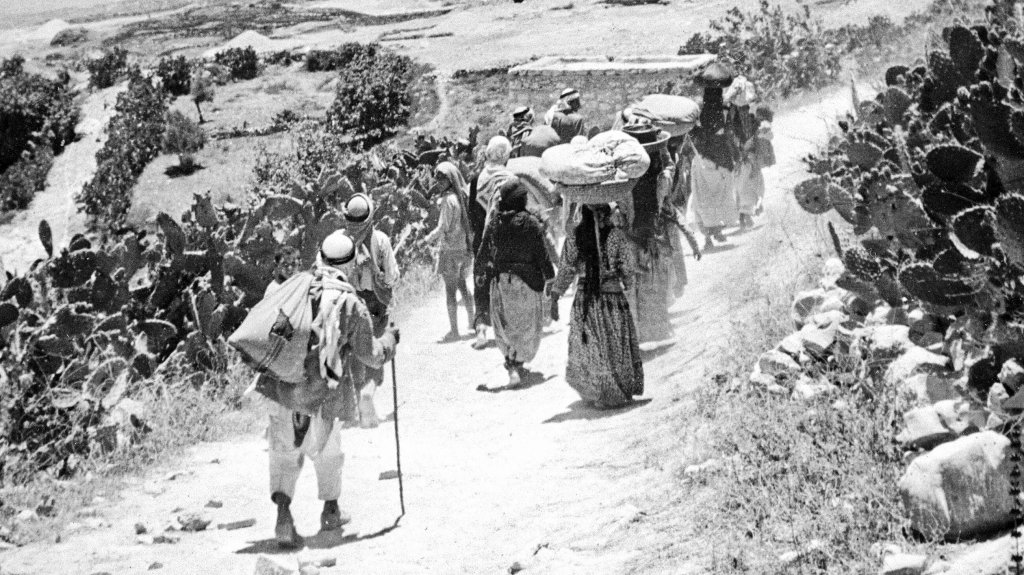
    May 15, 2025 marks the 77 year anniversary of the 1948 Nakba, The Israeli ethnic cleaning campaign against the Palestinians following the declaration of Israel’s independence.

    The Naming of the Nakba as an ethnic cleansing campaign is absolutely correct and sets the stage for the ongoing decades long Israeli imposed Apartheid and genocide of the Palestinian people.

    Pre-Nakba History

    From about 1517 to 1917, the land of Palestine was under the rule of the Ottoman Empire. After the fall of the Ottoman empire, Palestine was left as a British possession. The British signed what is known as the Balfour Declaration, which expressed the Empire’s support for, and recognition of the establishment of a Jewish homeland in Palestine, which at this point was a British Mandate whose rule mirrored that of a colony.

    The British were looking to secure Imperial interests in the region, with Winston Churchill stating that the creation of a Jewish state under the protection of the British crown would be “beneficial and would be especially in harmony with the truest interests of the British Empire.” The creation of this state would serve as a bulwark against any threat to British interests in the region, a role that Israel still serves for the U.S. today. From this point on, the British would help facilitate Jewish settlement into Palestine.

    This settlement would serve as the basis for a colonial occupation with the Jewish population rising from about 9% to nearly 27% between 1922 to 1935.

    The 1948 Nakba

    Fast forward to 1947. The U.N. provided a partition plan to create 2 states, one Jewish and the other Palestinian, in historic Palestine granting the majority of the land to the minority population of zionists.

    Following this partition plan, militant groups called the Haganah started what was called Plan Dalet, which in April 1948 aimed to forcibly seize the lands designated to them in the 1947 Partition plan (Land which was populated by Palestinians) as well as land designated to the Palestinian state. This included the occupation and complete destruction of Palestinian villages. They successfully seized land that was intended to be given to the Palestinian state and forcibly removed Palestinians who were living in the now designated Israeli territory, brutally expelling and killing inhabitants.

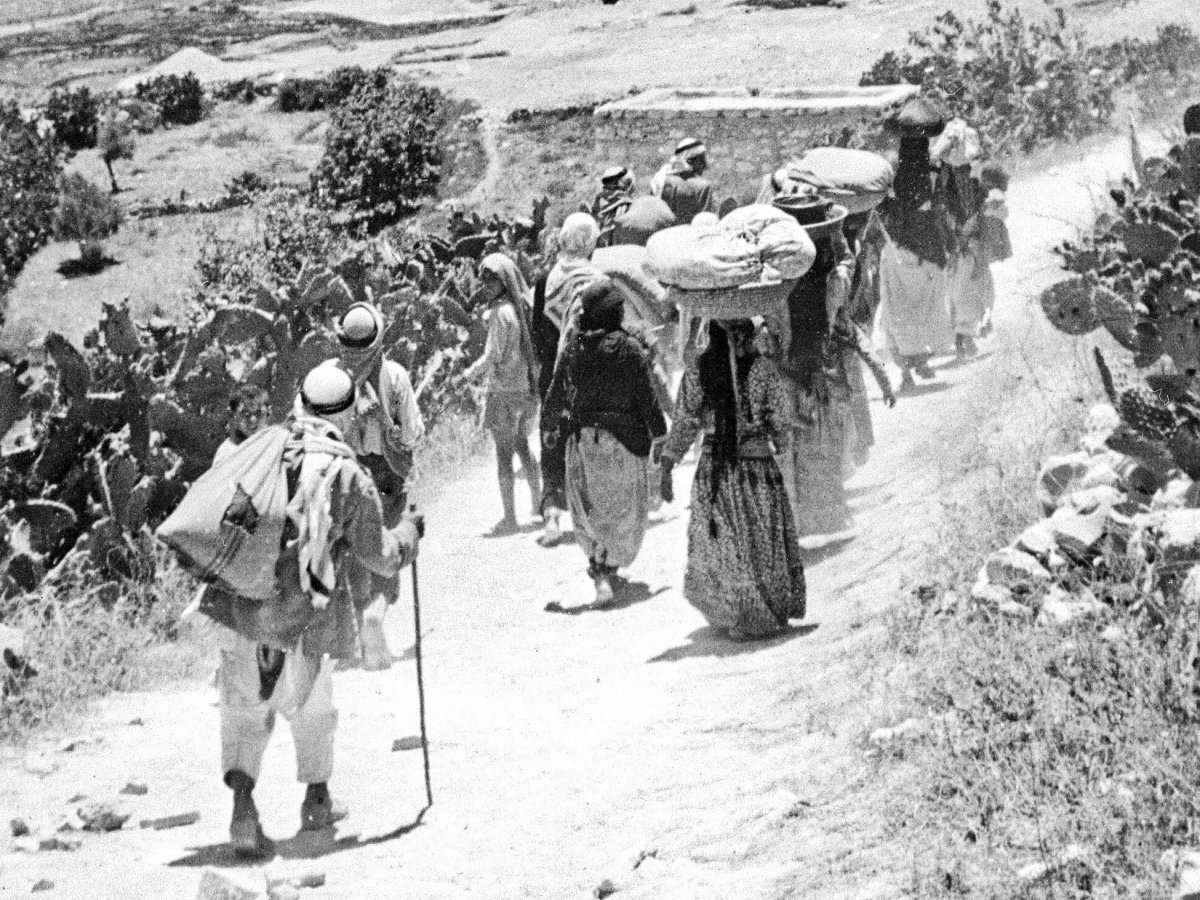
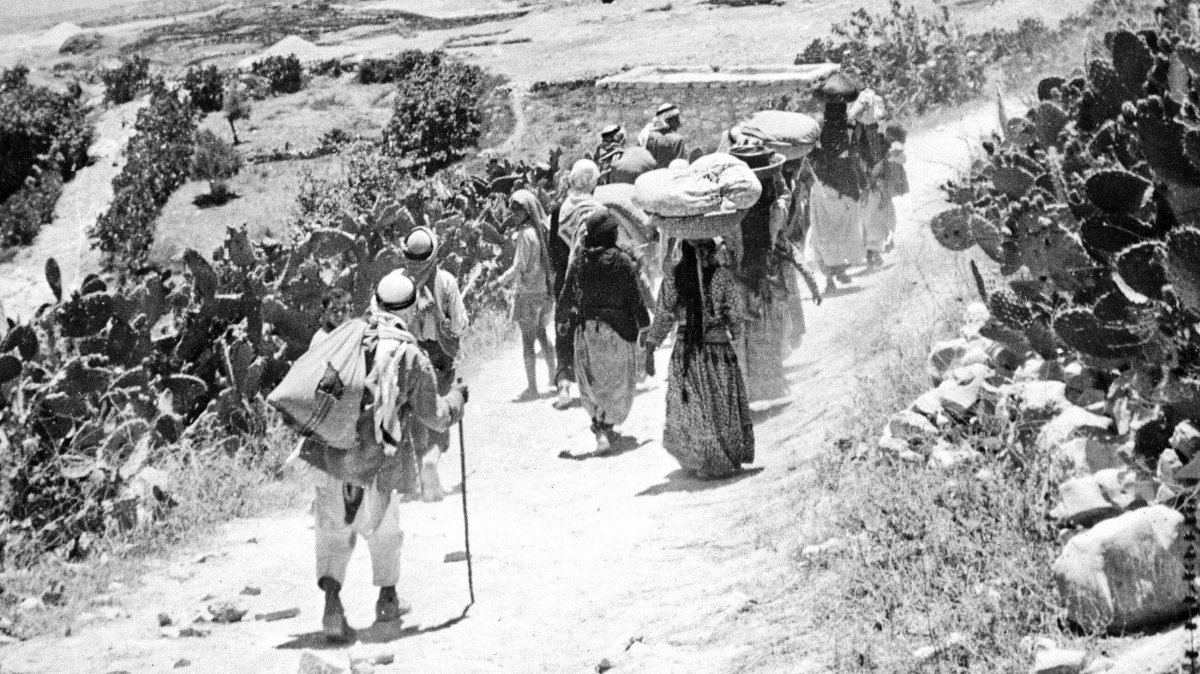
    On May 14, 1948 the British Mandate officially ended and Israel declared it’s independence. The day after on May 15, 1948, Israel expanded it’s horrific ethnic cleansing campaign. Israeli settlers raided and destroyed approximately 500 Palestinians villages and cities, replacing them with Jewish settlements, killing about 15,000 thousand people, and expelling 750,000 Palestinians from what Israel considered to be it’s territory in Historic Palestine.

    This left 750,00 Palestinians displaced in refugee camps in Gaza, the west bank, and surrounding countries, many legally prevented from returning to their homes.

    In the initial partition plan, Israel was unjustifiably given about 55% of Palestinian territory. Following the onset of the Nakba, Israel controlled about 78% of the land, showing the extent to which the Israeli project, from it’s inception to the present, has ignored and violated Palestinian sovereignty, proving itself to be the aggressor.

    The Palestinians were never given an opportunity to create their own state within their historic homeland, with the remaining Palestinian territories (Gaza and the West bank) falling under Israeli control and occupation by 1967.

    Legacy of the Nakba and its Continuation

    Since then, the Israeli government has subjected the Palestinian people to endless Apartheid and Genocide, controlling just about every aspect of Palestinian life, from the movement of Palestinians through unjustifiable checkpoints, to controlling the amount of humanitarian aid that enters Palestinian territory, to controlling their infrastructure, and to outright slaughter of anybody and everybody.

    While it may be portrayed as a conflict or a “war” between two equal warring states sharing equal responsibility, the truth is that Palestinians have never been afforded any form of genuine self determination, any chance at sovereignty, or any form of legal resistance against Israeli control. The Palestinians have been under continuous decades long occupation and control by a genocidal apartheid regime. It is very clearly an oppressed subjugated by the oppressors.

    The actions witnessed by Israeli militants during the Nakba, from the destruction of Palestinian Villages and cities, to the expelling of indigenous Palestinian inhabitants, to blatant killings, have set the stage for every action Israel has taken in Palestinian territory up to the Present with Palestinians at no point being given any sovereignty to determine the fate of their own existence.

    Many Palestinians today argue that the Nakba never ended, citing ongoing Israeli settlement expansion in Gaza and in the Westbank, violating again and again Palestinian territory and continuing with ongoing expulsions and killings of the Palestinian people.

  • Update: Majority of Gaza Under “No-Go” Zones as Israel Continues to Block Entry of Humanitarian Supplies

    Update: Majority of Gaza Under “No-Go” Zones as Israel Continues to Block Entry of Humanitarian Supplies

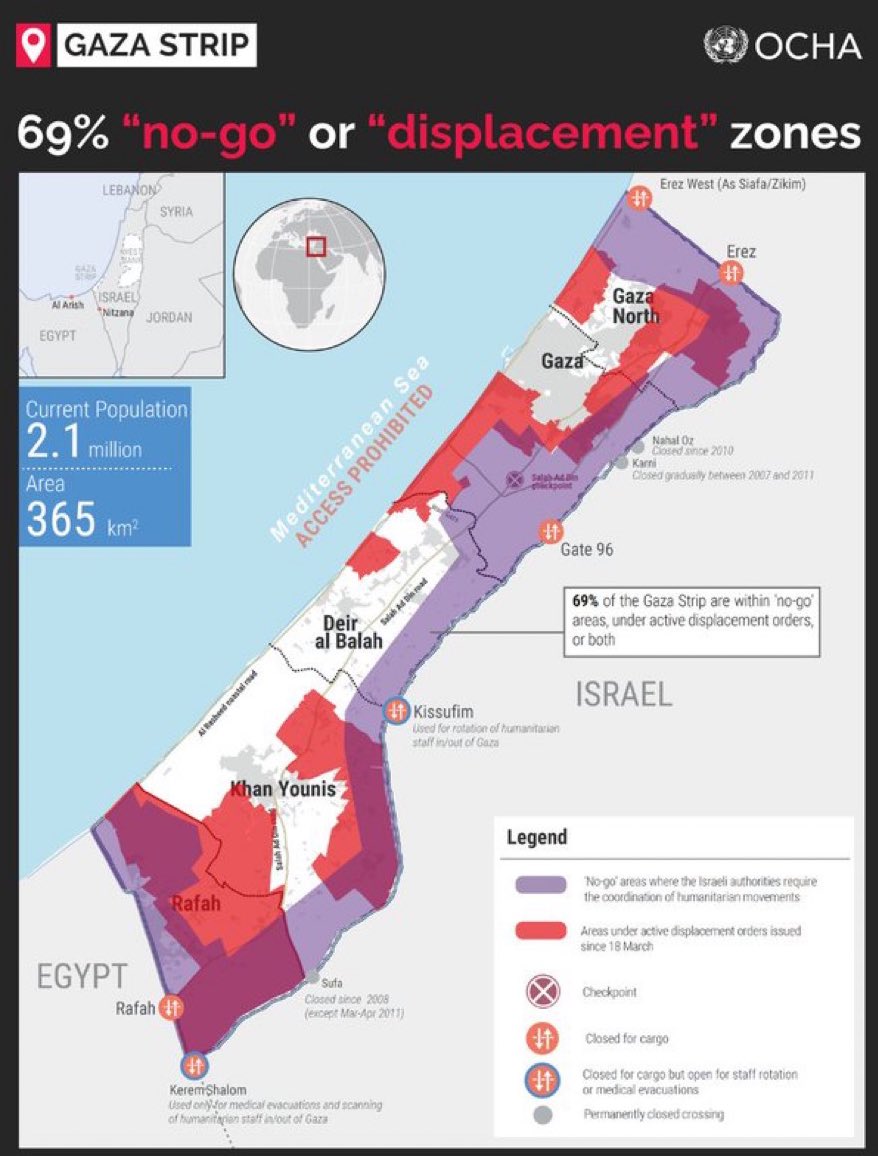
    Between March 18 to April 14, the Israeli military issued 20 displacement orders, forcibly relocating and displacing hundreds of thousands of Palestinians to ever decreasing zones within the Gaza strip. Over two thirds of the Gaza strip are now under these “No-Go” zones, cutting off connections within the strip and with Egypt as well, which has historically been the only crossing in and out of the Gaza strip not controlled by Israel, and a crucial crossing point for humanitarian aid.

    The displacement zones also disconnect cities such as Rafah, Khan Younis, and Gaza city from each other within the stip. Israeli Defense Minister Israel Katz has stated that Israeli military forces will remain in the designated security zones that it has established within the Gaza strip through seizure of Palestinian land. These zones will serve as corridors for the Israeli Military to occupy the Gaza Strip and will allow the military to further monitor and control the movement of Palestinians.

    Additionally, Katz has declared that “all of Rafah will be evacuated and there will be a security zone”. This is especially concerning as Rafah has served as a shelter for Palestinian refugees fleeing Israeli-caused destruction elsewhere in the Gaza strip, also serving as a reception point for humanitarian aid, and as a connection to the Egyptian border for those seeking emigration.

    Defense Minister Israel Katz has also stated: “Gaza will become smaller and more isolated, and more and more of its residents will be forced to evacuate from the fighting zones.”

    In conjunction with the implementation of these displacement zones, Israel has been blocking the entry of any humanitarian aid into Gaza. The UN has shared that the Palestinian Refugee Agency (UNRWA) has humanitarian supplies stockpiled outside of the Gaza strip. The only barrier to delivery is the refusal by the Israeli government to allow that aid to enter. The UNRWA has has warned that “supplies inside Gaza are nearly all gone, with food stocks running dangerously low and only 250 food parcels left”. Israel has blocked the entry of any food, medicine, and other humanitarian aid since March 2.

    U.S. foreign policy has played a crucial role in the development of this conflict and can play a crucial role in pressuring a ceasefire. U.S. arms manufacturers and foreign policy diplomats provide Israel with a majority of its military and economic support, allowing the Israeli military to conduct its actions on the scale that it currently operates. As many have pointed out, the administration in power in the U.S. can pressure ceasefire negotiations by withholding said military and economic aid. However, this is a power not exercised by U.S. administrations.